One company,
The full school journey.
We manage educational projects holistically, redefining
learning spaces through innovation, community focus, and sustainability.
OUR APPROACH
How we design exceptional learning spaces
Through integrated architecture, interior design, furniture design, and strategic execution, all working as one seamless system.
THE PHILOSOPHY
Space is the Third Teacher.
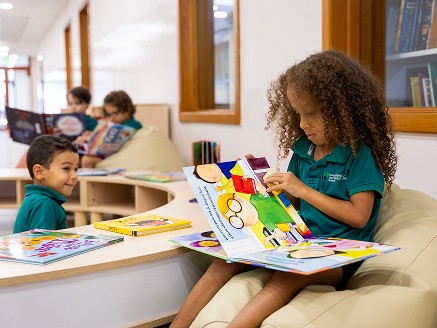
The Reggio Emilia principle holds that physical space is an active teacher alongside educators and peers. A room's light, acoustics, materials, and layout communicate whether children are trusted and capable.
At Koda, this principle isn't a guiding inspiration, it's a design brief. Every project begins by inquiring what a space communicates, because educational environments teach whether intentionally or not.
THE RESEARCH
Thinking Beyond the Box
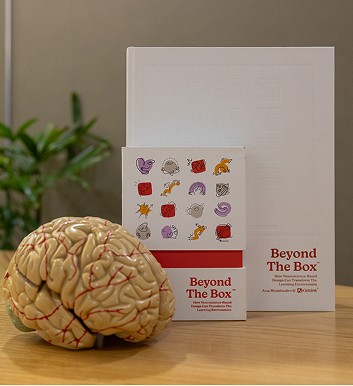
Most school buildings contain learning rather than catalysing it. To bridge this gap between architectural convention and evidence-based design, we reviewed 40 years of research, 250+ scientific articles, and 1,000+ global educational spaces - a body of work that became Thinking Beyond the Box.
We developed the Enriched Environment Model© in collaboration with neuroscientist Ana Mombiedro to enable clear evaluation of spaces across four core dimensions: Sensory Cues, Motor Resources, Cognitive Activity, and Social-Emotional Interaction. By designing around how the human brain responds to its environment, our spaces move beyond housing a curriculum - they actively enrich how it is experienced.
PARTNERSHIPS
Designing with Genuine Collaboration
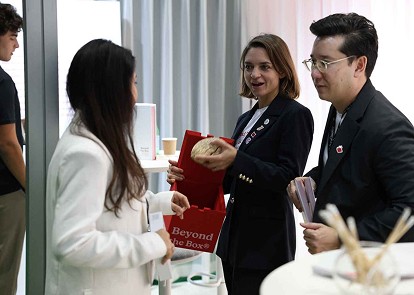
Great educational architecture is never designed in isolation; it is shaped through close, active partnerships with the educators, associates, and communities who bring it to life. In any meaningful learning environment, the first input is the vision, the second is the lived experience of the community, and the third is the design process itself: its capacity to listen, to observe movement and focus, and to translate complex human needs into physical spaces that truly work.
The project begins with deep, intentional listening to the people who inhabit the space, through active discussions and workshops. Throughout the process, we listen and discuss with our partners to design the best spaces for their schools’ goals and vision.